

Pulling a tray of warm, crackle-topped soft gingerbread cookies from the oven in just 25 minutes feels like a small kitchen miracle on a busy afternoon. Each bite gives way to a chewy, mahogany-brown molasses center framed by crisp, sugar-crusted edges.
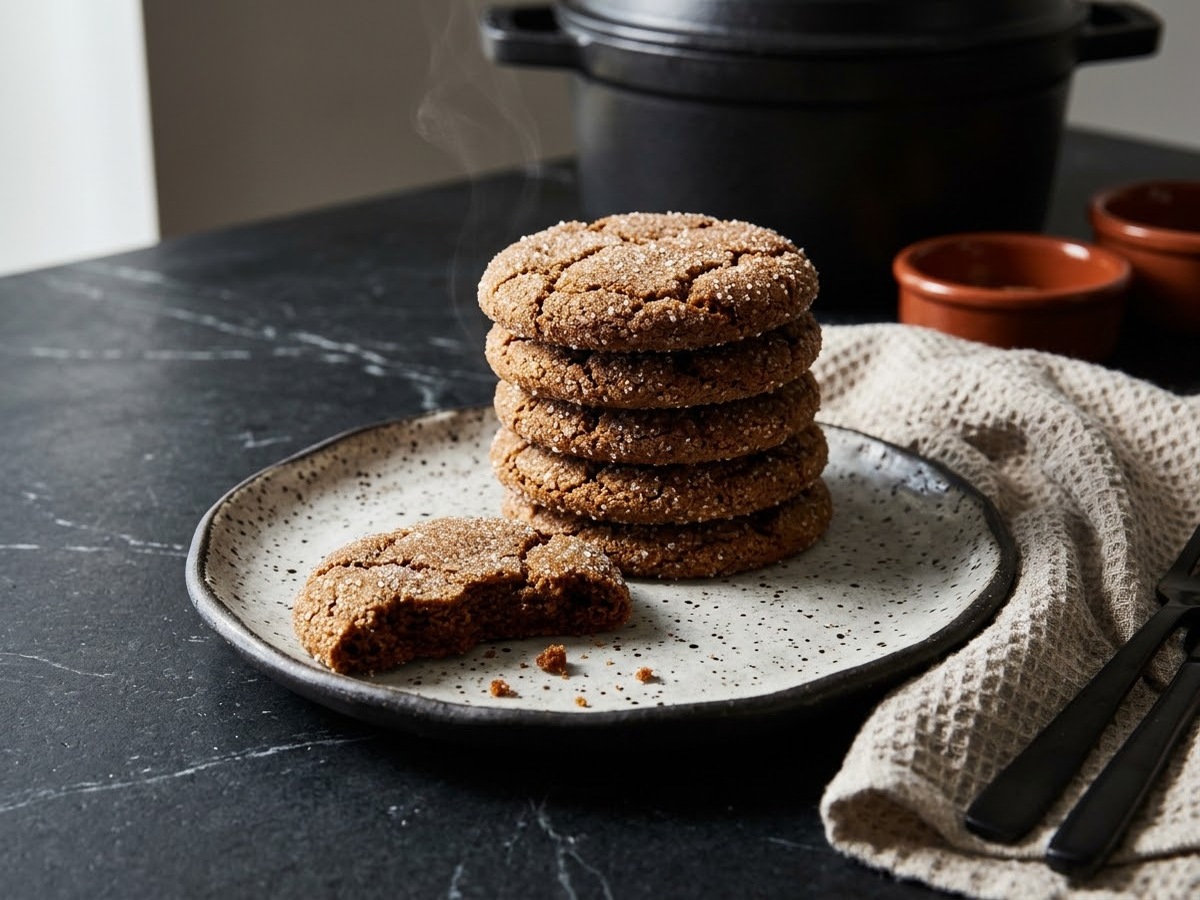
After testing seven batches in my home kitchen, I found that most scratch gingerbread recipes either demand two hours of refrigerator chilling or bake up dry and cake-like. Those failures usually come down to over-measuring flour and baking the cookies a few minutes too long.
By weighing the flour—or using the spoon-and-level method—and starting with unsalted butter softened precisely to 65°F (18°C), this dough holds its thick dome shape straight from the mixing bowl. You get bakery-style height without waiting for cold dough.
Best of all, pulling the sheet pan at the 9-to-10-minute mark while the centers still look slightly puffy guarantees a tender, bendable crumb that stays soft for days.
Why These Foolproof Soft Gingerbread Cookies Belongs in Your Rotation
- Zero Chill Time: Balanced butter temperature and flour ratio let you scoop and bake immediately in 25 minutes total.
- Chewy Molasses Centers: Dark brown sugar and unsulphured molasses lock in moisture so cookies stay soft for up to six days.
- Warm Four-Spice Blend: Ground ginger, cinnamon, cloves, and nutmeg deliver bold warmth without overpowering sweetness.
- Sparkling Crackled Tops: A quick roll in granulated sugar pulls surface moisture to form crisp, picture-ready fissures.
- Freezer-Friendly Dough: Portion extra dough balls ahead of time and bake straight from frozen whenever company drops by.
Ingredient Breakdown & Freshness Tips
Every pantry staple in this dough has a specific structural job, so accurate measuring makes all the difference.
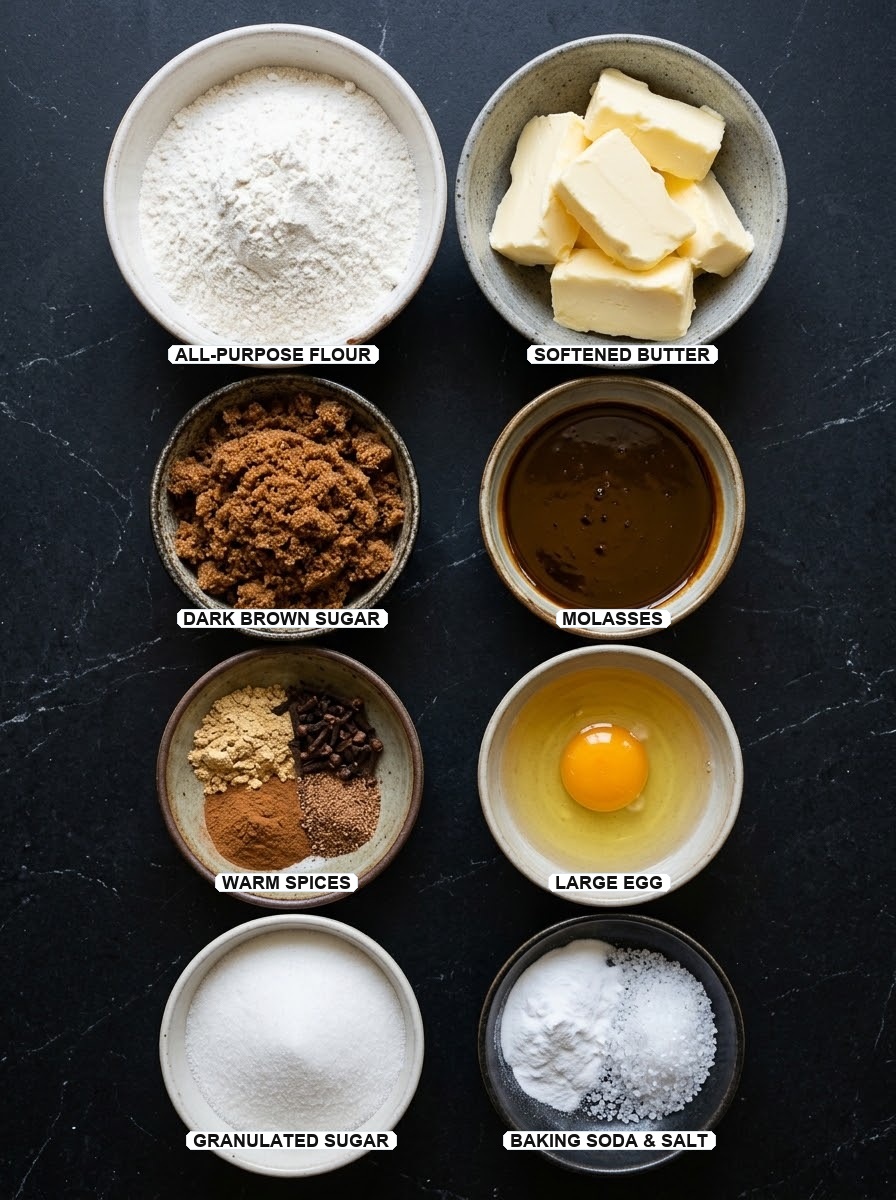
- All-Purpose Flour (2 1/4 cups / 280 g): Spoon the flour into your measuring cup and level it with a knife; scooping straight from the bag packs in extra grams that make cookies dry.
- Unsalted Butter (3/4 cup / 170 g): Soften to 65°F (18°C) so your finger leaves a gentle dent without sinking into greasy mush.
- Dark Brown Sugar (1/2 cup / 105 g): Higher molasses content than light brown sugar deepens both the caramel flavor and chewy texture.
- Unsulphured Molasses (1/3 cup / 113 g): Choose standard robust or original unsulphured molasses—never bitter blackstrap, which tastes harsh and scorches easily.
- Ground Ginger & Cinnamon (2 tsp / 5 g ginger, 1 1/2 tsp / 4 g cinnamon): Check the expiration date on your spice jars; fresh spices give lively heat instead of dusty warmth.
- Ground Cloves & Nutmeg (1/2 tsp / 1.5 g each): Small amounts round out the ginger without turning the dough medicinal.
- Baking Soda & Fine Sea Salt (1 tsp / 5 g baking soda, 1/2 tsp / 3 g salt): Baking soda reacts with acidic molasses for lift and golden browning, while salt sharpens the spice.
- Large Egg & Vanilla Bean Paste (1 egg / 50 g, 1 tsp / 5 ml): Room-temperature egg emulsifies smoothly into creamed butter, and alcohol-free vanilla bean paste adds warm depth.
- Granulated Sugar (1/3 cup / 67 g): Rolling the dough balls in coarse crystals creates crisp edges and classic bakery crackles.
Why Molasses and 350°F Baking Lock In a Chewy Crumb
Two factors control whether gingerbread cookies turn out pillowy or brittle: fat temperature and bake time. When butter sits at 65°F (18°C), creaming it with dark brown sugar traps tiny air pockets without melting the fat prematurely. If the butter is warm or greasy, the dough spreads flat on the pan before the flour proteins can set.
Baking on a light-colored aluminum sheet pan at 350°F (177°C) for just 9 to 10 minutes lets the edges set while the center stays around 190°F (88°C) and slightly soft. Leaving the cookies on the hot pan for 5 minutes after pulling them from the oven uses gentle carryover heat to finish setting the crumb without drying out the molasses.
Rachel’s Test-Kitchen Notes
- Use Light Aluminum Pans: Dark nonstick pans absorb extra radiant heat and over-brown cookie bottoms before the tops crackle.
- Grease Your Measuring Cup: Lightly coat the inside of your 1/3-cup measure with neutral oil or softened butter so every drop of molasses slides right out.
- Bake One Sheet at a Time: Center-rack baking ensures even airflow and consistent 10-minute timing across every batch.
| Stage | Target Temp / Time | Visual & Texture Cue | Resulting Crumb |
|---|---|---|---|
| Butter Softening | 65°F (18°C) | Cool to the touch, dents gently | Thick, domed cookies |
| Oven Bake | 350°F (177°C) / 9–10 mins | Set edges, soft puffed center | Chewy, bendable bite |
| Pan Rest | 5 mins on hot pan | Crackles deepen as tops settle | No raw doughy middle |
How to Make Soft Gingerbread Cookies (Step-by-Step Guide)
Step 1: Whisk the Dry Ingredients and Spices
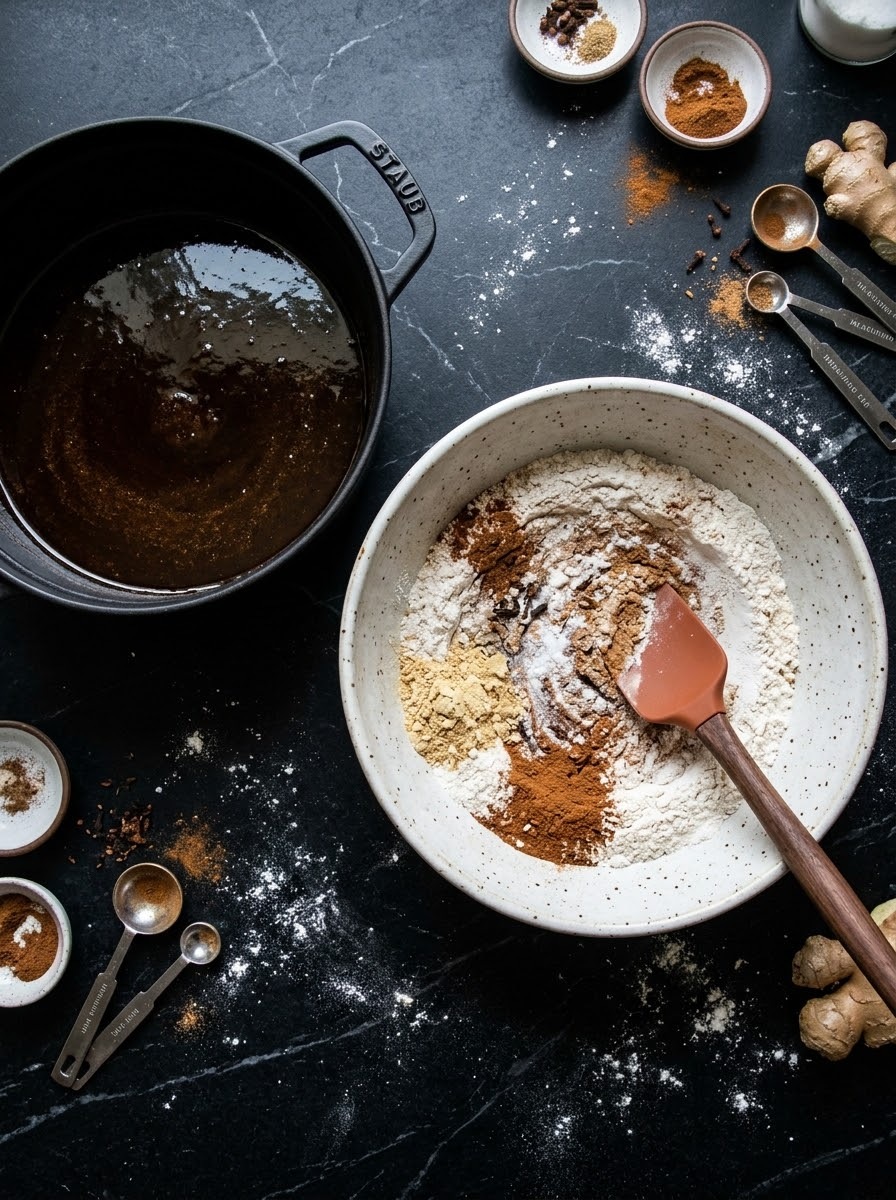
Preheat your oven to 350°F (177°C) and line two light-colored aluminum half-sheet pans with parchment paper. In a medium bowl, whisk 2 1/4 cups (280 g) spooned-and-leveled all-purpose flour, 2 tsp ground ginger, 1 1/2 tsp ground cinnamon, 1/2 tsp ground cloves, 1/2 tsp ground nutmeg, 1 tsp baking soda, and 1/2 tsp fine sea salt until evenly tinted with zero white streaks.
Step 2: Cream the Butter, Sugar, and Molasses
In a large bowl, beat 3/4 cup (170 g) softened unsalted butter and 1/2 cup (105 g) packed dark brown sugar on medium-high speed for 2 minutes until pale and creamy. Scrape the bowl, then add 1/3 cup (113 g) unsulphured molasses, 1 room-temperature egg, and 1 tsp alcohol-free vanilla bean paste, beating 60 seconds until glossy and smooth.
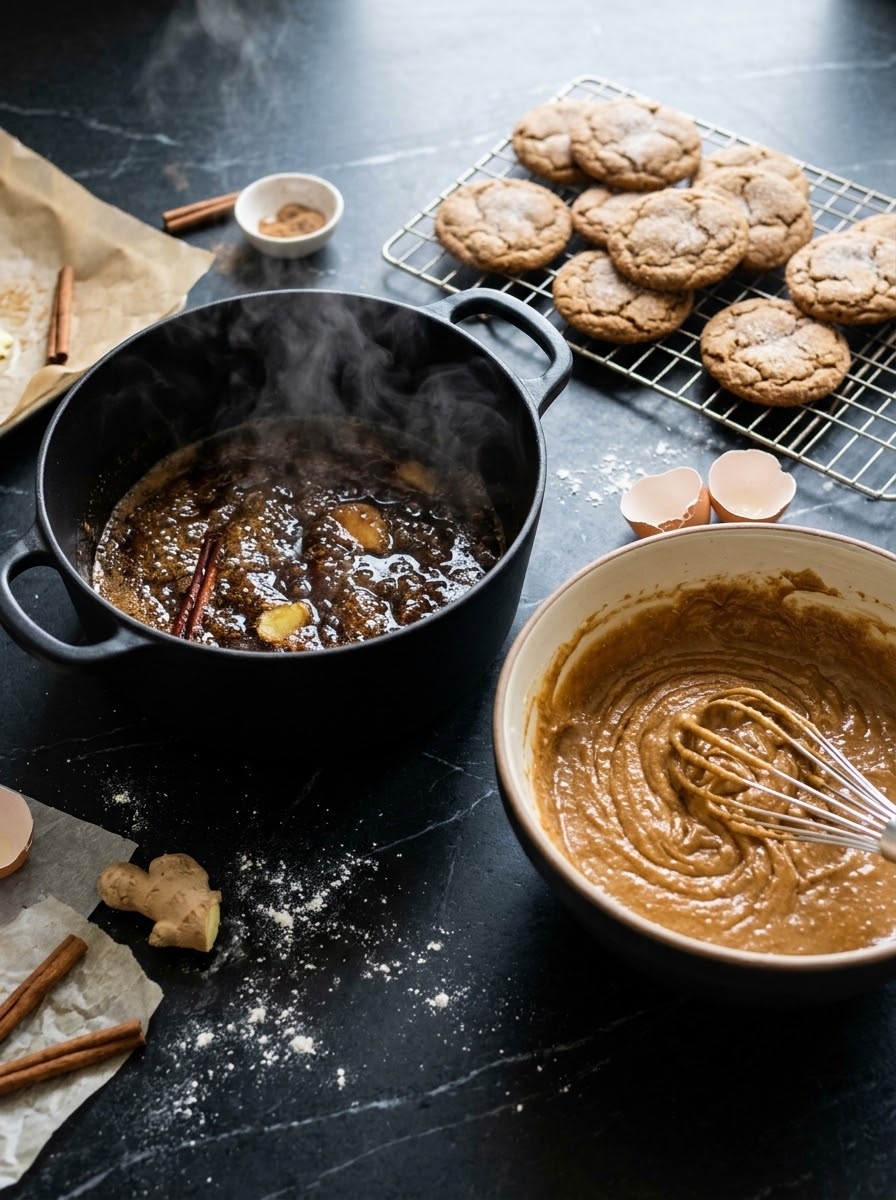
Step 3: Fold In Dry Ingredients and Roll in Sugar
Mix the dry ingredients into the wet base on low speed in two additions just until the flour disappears, about 20 seconds. Scoop 1.5-tablespoon (30 g) portions, roll into smooth balls, coat generously in 1/3 cup (67 g) granulated sugar, and space them 2 inches apart on the parchment-lined sheets.
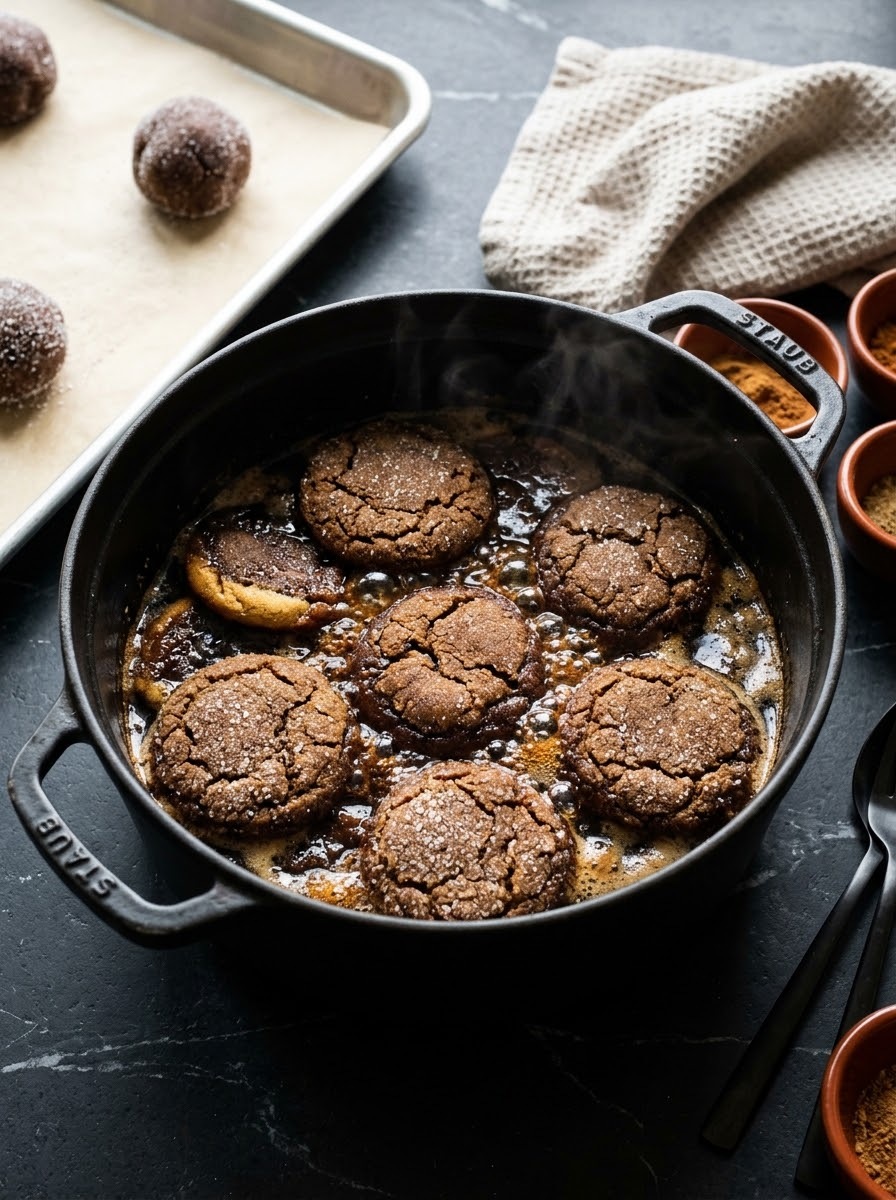
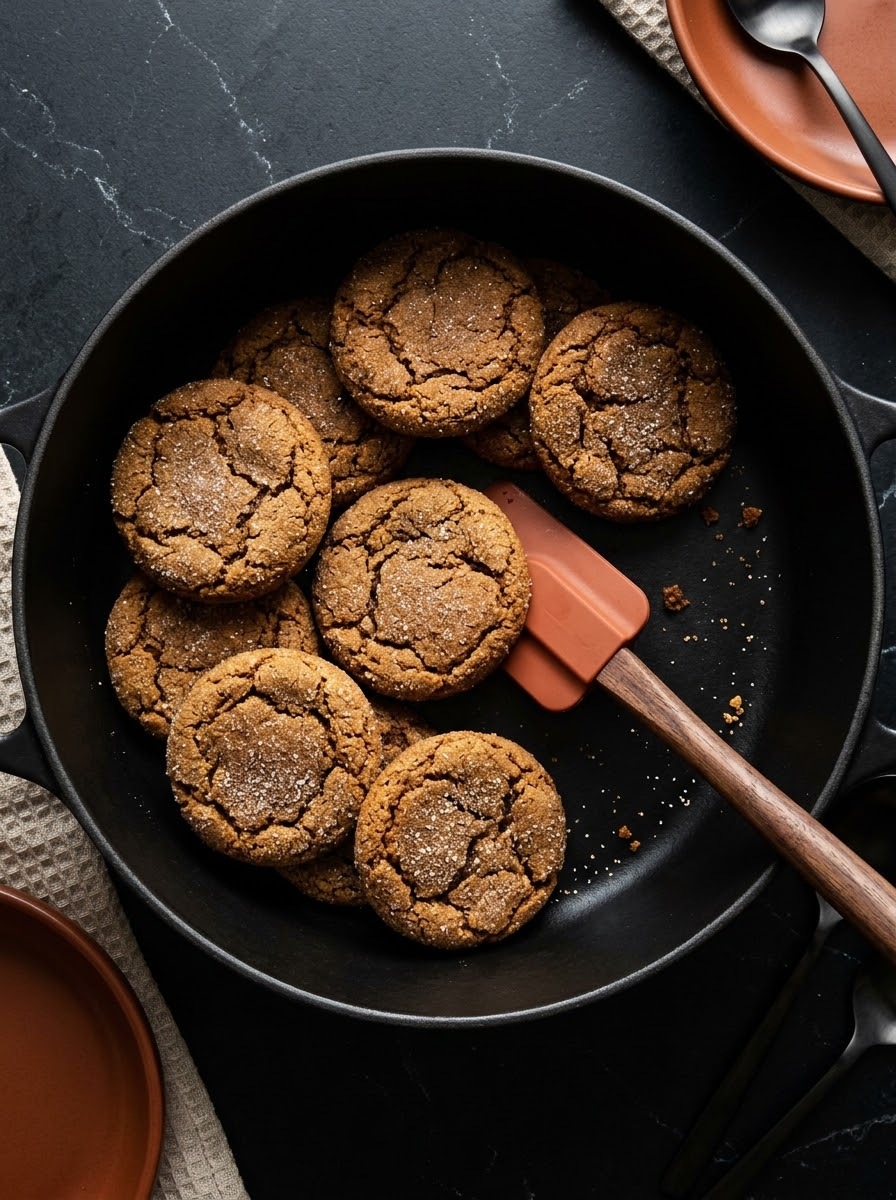
Step 4: Bake Until Puffed and Rest on the Pan
Bake one pan at a time on the center rack for 9 to 10 minutes until the edges feel set and the tops show fine crackles while the centers still look slightly soft. Leave the cookies on the hot baking sheet for 5 full minutes before transferring them to a wire rack to cool completely.
Kitchen Pitfalls to Watch Out For
- Overbaking by 2 Minutes: Leaving cookies in the oven until the centers look firm turns them crisp and dry once cooled; pull them while the middle still looks slightly underdone.
- Using Blackstrap Molasses: Blackstrap is intensely bitter and low in sugar, which ruins the balanced caramel-spice flavor and leaves a charred aftertaste.
- Over-Packing the Flour Cup: Scooping directly into the flour bag adds up to 35 extra grams per cup, yielding stiff, cakey cookies that fail to crackle.
- Over-Mixing After Adding Flour: Beating on high speed once the flour goes in develops tough gluten; mix on low only until no dry pockets remain.
Flavor Swaps & Protein Options
- Crystallized Ginger Crunch: Fold 1/3 cup (55 g) finely minced crystallized ginger into the finished dough for bright, chewy pops of heat.
- White Chocolate Gingerbread: Stir 1/2 cup (85 g) white chocolate chips into the dough or dip half of each cooled cookie in melted white chocolate.
- Cardamom-Spiced Twist: Replace the 1/2 tsp ground cloves with 1/2 tsp freshly ground cardamom for a floral, Scandinavian-inspired spice profile.
- Nut-Butter Boost (Protein Swap): Swap 2 tbsp (32 g) of the softened butter for 2 tbsp creamy almond butter or sunflower seed butter for subtle nutty richness and extra plant protein.
Leftover Storage & Next-Day Reheating Tips
Room & Fridge Storage: Store completely cooled cookies in an airtight container at room temperature for up to 6 days; tucking in a small piece of white sandwich bread keeps the centers ultra-soft. Refrigeration is unnecessary for baked cookies, though portioned raw dough balls keep covered in the fridge for up to 48 hours before rolling in sugar and baking.
Freezing & Reheating: Freeze baked cookies in a zip-top freezer bag with parchment between layers for up to 3 months, or freeze unbaked dough balls on a tray before bagging. Bake frozen dough balls straight from the freezer (after rolling in sugar) for 11 to 12 minutes, or warm a thawed cookie in the microwave for 6 seconds for a fresh-from-the-oven chew.
Frequently Asked Questions
Why didn’t my gingerbread cookies crackle on top?
Cookies usually stay smooth if the dough has too much flour or if they missed the granulated sugar coating. Measuring flour by weight (280 g) and rolling each ball generously in sugar helps the surface dry slightly faster than the expanding center, creating crisp crackles.
Can I use salted butter instead of unsalted butter?
Yes, you can substitute salted butter 1:1 for the unsalted butter. Simply reduce the added fine sea salt from 1/2 tsp down to 1/4 tsp so the spice blend stays balanced.
Do I need to chill this gingerbread cookie dough?
No chilling is required as long as your butter starts at 65°F (18°C), which is cool and pliable rather than warm or melted. If your kitchen is above 78°F (25°C) and the dough feels sticky, chill the bowl for 15 minutes before scooping.
How can I tell when soft gingerbread cookies are done baking?
Look at the outer 1/2 inch of each cookie: the edges should appear matte and set, and small cracks should open across the sugar-dusted dome while the very center still looks glossy and slightly soft.
The Final Result & What to Serve With It
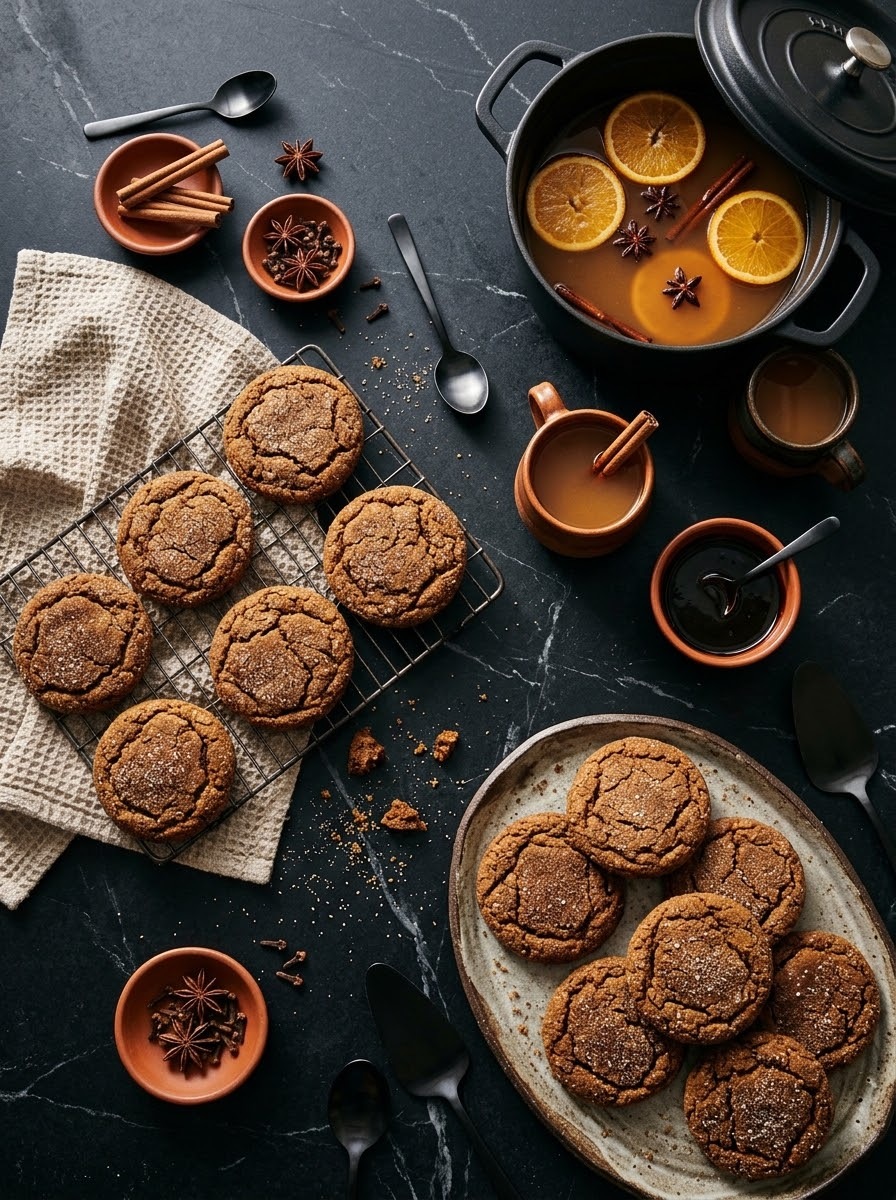
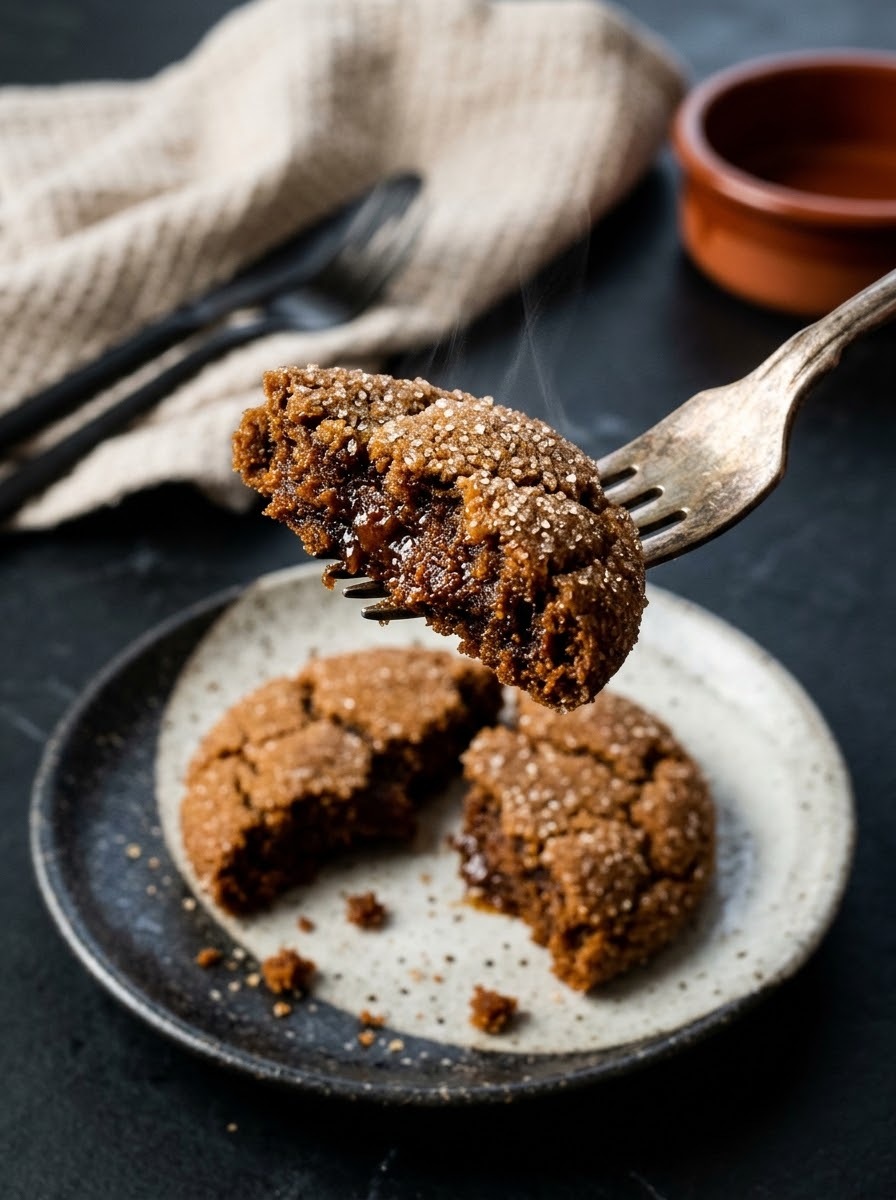
Once cooled on the wire rack, these soft gingerbread cookies stack neatly with crisp sugar edges and bendable, deeply spiced centers that taste just as good on day four as they do warm from the pan. Serve them alongside hot coffee, cold milk, steamed chai, or warm spiced apple cider for an easy family dessert everyone reaches for twice.
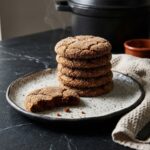
25-Minute Soft Gingerbread Cookies with Warm Molasses
- Total Time: 25 Mins
- Yield: 24 servings 1x
Description
These 25-minute soft gingerbread cookies bake up with chewy molasses centers and crisp spiced edges. No chilling required—ready in 25 minutes.
Ingredients
- 2 1/4 cups (280 g) all-purpose flour, spooned and leveled
- 2 tsp (5 g) ground ginger
- 1 1/2 tsp (4 g) ground cinnamon
- 1/2 tsp (1.5 g) ground cloves
- 1/2 tsp (1.5 g) ground nutmeg
- 1 tsp (5 g) baking soda
- 1/2 tsp (3 g) fine sea salt
- 3/4 cup (170 g) unsalted butter, softened to 65°F (18°C)
- 1/2 cup (105 g) packed dark brown sugar
- 1/3 cup (113 g) unsulphured molasses (not blackstrap)
- 1 large egg (50 g), at room temperature
- 1 tsp (5 ml) alcohol-free vanilla bean paste
- 1/3 cup (67 g) granulated sugar, for rolling
Instructions
- Preheat the oven to 350°F (177°C) and line two light-colored aluminum half-sheet pans with parchment paper. In a medium mixing bowl, whisk together 2 1/4 cups (280 g) spooned-and-leveled all-purpose flour, 2 tsp (5 g) ground ginger, 1 1/2 tsp (4 g) ground cinnamon, 1/2 tsp (1.5 g) ground cloves, 1/2 tsp (1.5 g) ground nutmeg, 1 tsp (5 g) baking soda, and 1/2 tsp (3 g) fine sea salt until no spice streaks remain.
- In a large bowl using a hand mixer or stand mixer fitted with the paddle attachment, beat 3/4 cup (170 g) softened unsalted butter (65°F/18°C) and 1/2 cup (105 g) packed dark brown sugar on medium-high speed for 2 minutes until pale, smooth, and creamy. Scrape down the sides of the bowl with a silicone spatula.
- Add 1/3 cup (113 g) unsulphured molasses, 1 room-temperature large egg (50 g), and 1 tsp (5 ml) alcohol-free vanilla bean paste to the butter mixture. Beat on medium speed for 60 seconds until completely emulsified and glossy, scraping the bowl halfway through.
- Add the whisked dry ingredients to the wet mixture in two additions, mixing on low speed just until the last streaks of flour disappear, about 20 seconds. The dough should feel thick, pliable, and slightly tacky without sticking aggressively to clean fingertips.
- Pour 1/3 cup (67 g) granulated sugar into a wide shallow bowl. Scoop 1.5-tablespoon (30 g) portions of dough, roll each into a smooth ball between your palms, and coat evenly in the granulated sugar. Arrange 12 dough balls per prepared sheet pan, spacing them 2 inches apart.
- Bake one sheet pan at a time on the center oven rack at 350°F (177°C) for 9 to 10 minutes, until the edges are set, puffed, and lightly crackled on top while the centers still look slightly soft and underbaked. Leave the cookies on the hot pan for 5 minutes to finish setting, then transfer to a wire rack to cool completely.
Notes
- Make-Ahead Window: You can mix and portion the dough balls up to 48 hours ahead, cover tightly in an airtight container in the fridge, roll in granulated sugar just before baking, and add 1 minute to the bake time.
- Storage & Refreshing: Store cooled cookies in an airtight container at room temperature with a small piece of white sandwich bread (or a 1/2-inch apple wedge) for up to 6 days to keep the centers pillowy; warm a cookie in the microwave for 6 seconds to revive the fresh-baked chew.
- Tested Swap: For extra ginger bite, fold 1/3 cup (55 g) finely minced crystallized ginger into the finished dough right before scooping, or swap 1/2 tsp ground cloves for 1/2 tsp ground allspice for a milder spice profile.
- Prep Time: 15 minutes
- Cook Time: 10 minutes
- Category: Dessert
- Method: Baking
- Cuisine: American