

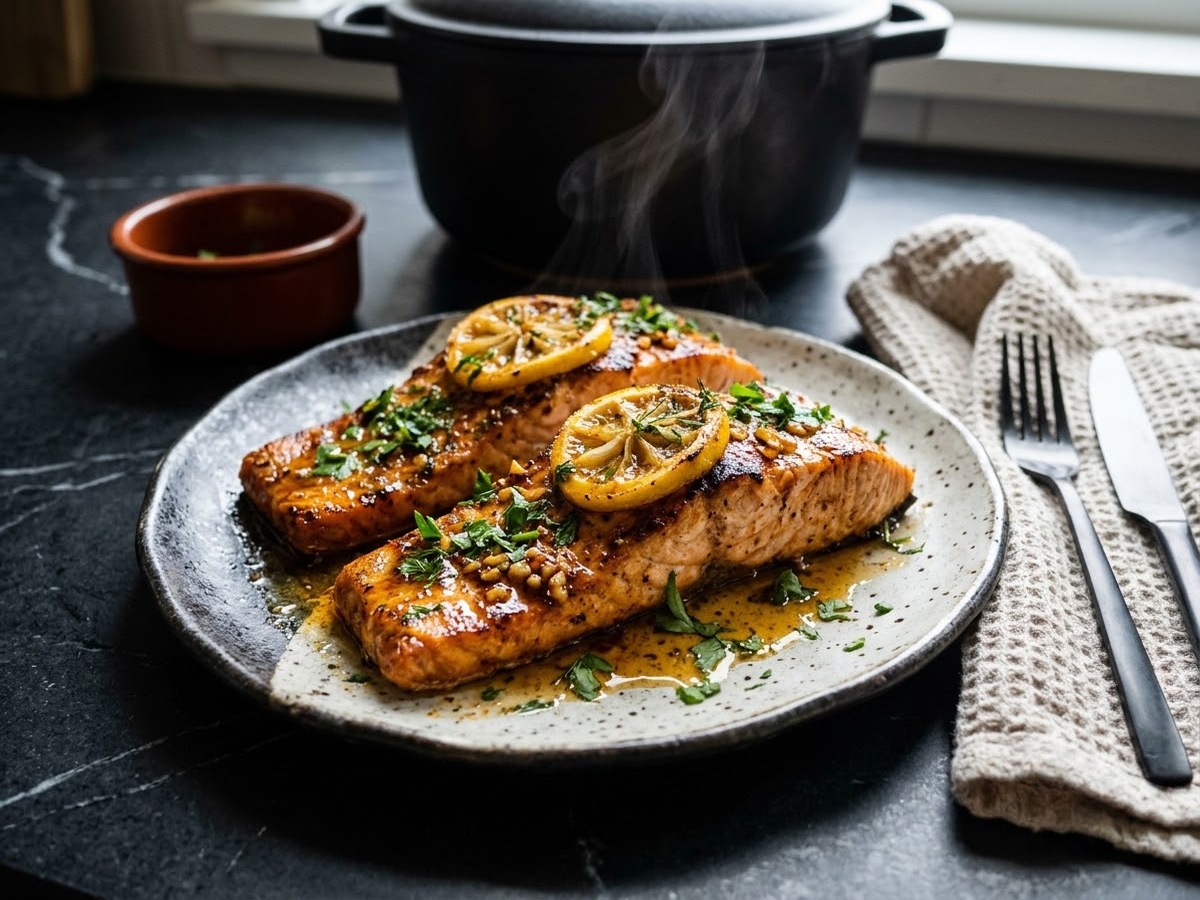
Sliding a pan of baked salmon into a hot 400°F (205°C) oven should give you tender, buttery flakes in under 15 minutes—not dry, chalky fillets swimming in separated fat. After testing dozens of weeknight batches, this lemon-garlic Dijon method delivers consistent, moist results every single time.
Most home recipes fail because cold fillets go straight into the pan damp, causing the butter to slide off while surface moisture steams the fish. Worse, leaving salmon in the oven until it hits 145°F pushes out its natural juices and leaves behind white albumin curds.
In our test kitchen, two small habits fixed both problems completely. First, patting the fillets bone-dry and whisking Dijon mustard into melted butter creates a thick, clingy emulsion that stays put under high heat.
Second, roasting uncovered at 400°F (205°C) and pulling the pan at 128°F (53°C) lets gentle carryover heat finish the center while keeping every layer juicy.
What Makes This Baked Salmon Recipe So Reliable
- Total Time: 25 minutes from fridge to table, with just 10 minutes of hands-on prep.
- Emulsified Glaze: Dijon mustard binds melted butter and lemon juice so the sauce coats the fish instead of pooling.
- Exact Target Temp: Pulling at 125°F–130°F (52°C–54°C) prevents dry edges and chalky protein buildup.
- Single-Pan Cleanup: Everything roasts and bastes in one oven-safe Dutch oven or baking dish.
- 100% Pantry-Friendly: Uses everyday staples—butter, garlic, lemon, smoked paprika, and fresh herbs.
Key Ingredients & Smart Pantry Notes
Choosing evenly cut fillets and balancing richness with acid makes all the difference in a quick 25-minute roast.
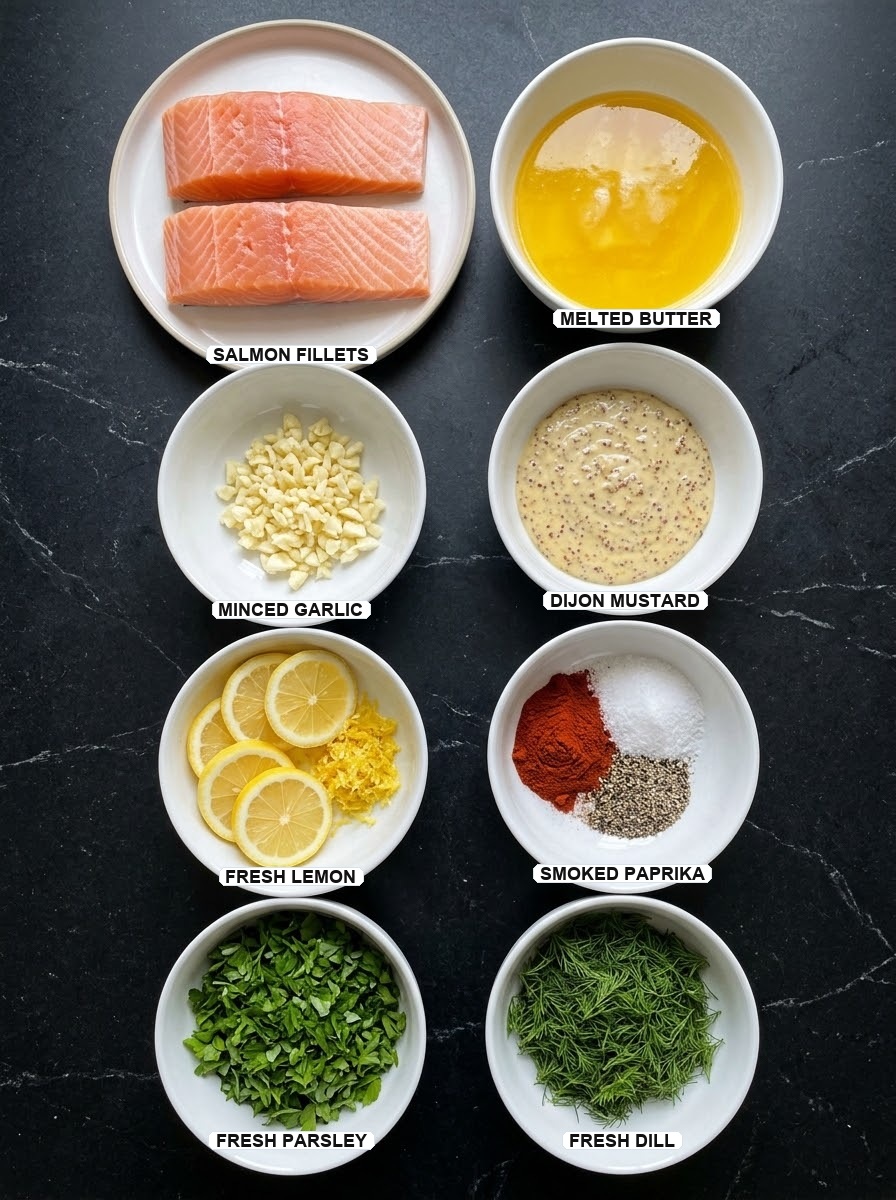
- Skin-On Atlantic Salmon Fillets (4 fillets, 6 oz / 170 g each): Look for center-cut pieces about 1 to 1.25 inches (2.5 to 3 cm) thick so they cook at the same speed. Leaving the skin on insulates the bottom from direct pan heat.
- Unsalted Butter (3 tbsp / 42 g, melted): Provides rich flavor and helps brown the garlic slightly in the oven without burning.
- Extra-Virgin Olive Oil (1 tbsp / 15 ml): Brushed onto the pan surface to keep the salmon skin from sticking at 400°F.
- Fresh Garlic (4 cloves / 12 g, finely minced): Gives sharp, savory aroma; mincing finely ensures it softens in 12 to 15 minutes rather than scorching.
- Fresh Lemon Juice & Zest (1 tbsp / 15 ml juice + 1 tsp / 2 g zest): Cuts through the rich butter and brightens the fish without overpowering it.
- Dijon Mustard (1 tbsp / 15 g): Acts as an emulsifier so the butter and lemon juice form a velvety coating rather than separating.
- Kosher Salt & Black Pepper (1 tsp / 5 g salt + 1/2 tsp / 1.5 g pepper): Seasons the thick fillets all the way through.
- Smoked Paprika (1/2 tsp / 1.5 g): Adds subtle warmth and a deep golden-amber tint to the butter glaze.
- Fresh Parsley & Dill (2 tbsp / 8 g parsley + 1 tbsp / 4 g dill): Scattered on after roasting so their bright herbal oils stay fresh.
Why High-Heat Roasting at 400°F Locks In Moisture Without Chalky Albumin
Salmon is rich in delicate omega-3 fats and muscle proteins that tighten rapidly above 140°F (60°C). When baked slowly at 325°F or 350°F, the outer layers sit in heat too long while waiting for the center to warm, squeezing out moisture and forcing white albumin protein to the surface.
Roasting at 400°F (205°C) cooks the fillets quickly from the outside in, setting the surface glaze in 12 to 15 minutes while the interior stays translucent-pink and buttery. Using an instant-read thermometer removes all guesswork.
Key Technique Tips for Baked Salmon
- Dry Before Glazing: Press paper towels firmly over both sides of the fish; any surface water dilutes the butter emulsion and prevents browning.
- Space the Fillets: Leave at least 1 inch (2.5 cm) between pieces in the pan so hot air circulates freely around the edges.
- Account for Carryover Heat: Pull the pan at 125°F–130°F (52°C–54°C); the residual pan heat raises the center another 5°F as it rests.
| Fillet Thickness | Oven Temp | Roast Time | Target Internal Temp |
|---|---|---|---|
| 0.75 inch (2 cm) | 400°F (205°C) | 9–11 mins | 125°F–130°F (52°C–54°C) |
| 1 to 1.25 inches (2.5–3 cm) | 400°F (205°C) | 12–15 mins | 125°F–130°F (52°C–54°C) |
| 1.5 inches (3.8 cm) | 400°F (205°C) | 16–18 mins | 125°F–130°F (52°C–54°C) |
Step-by-Step Instructions for Baked Salmon
Step 1: Dry and Arrange the Fillets
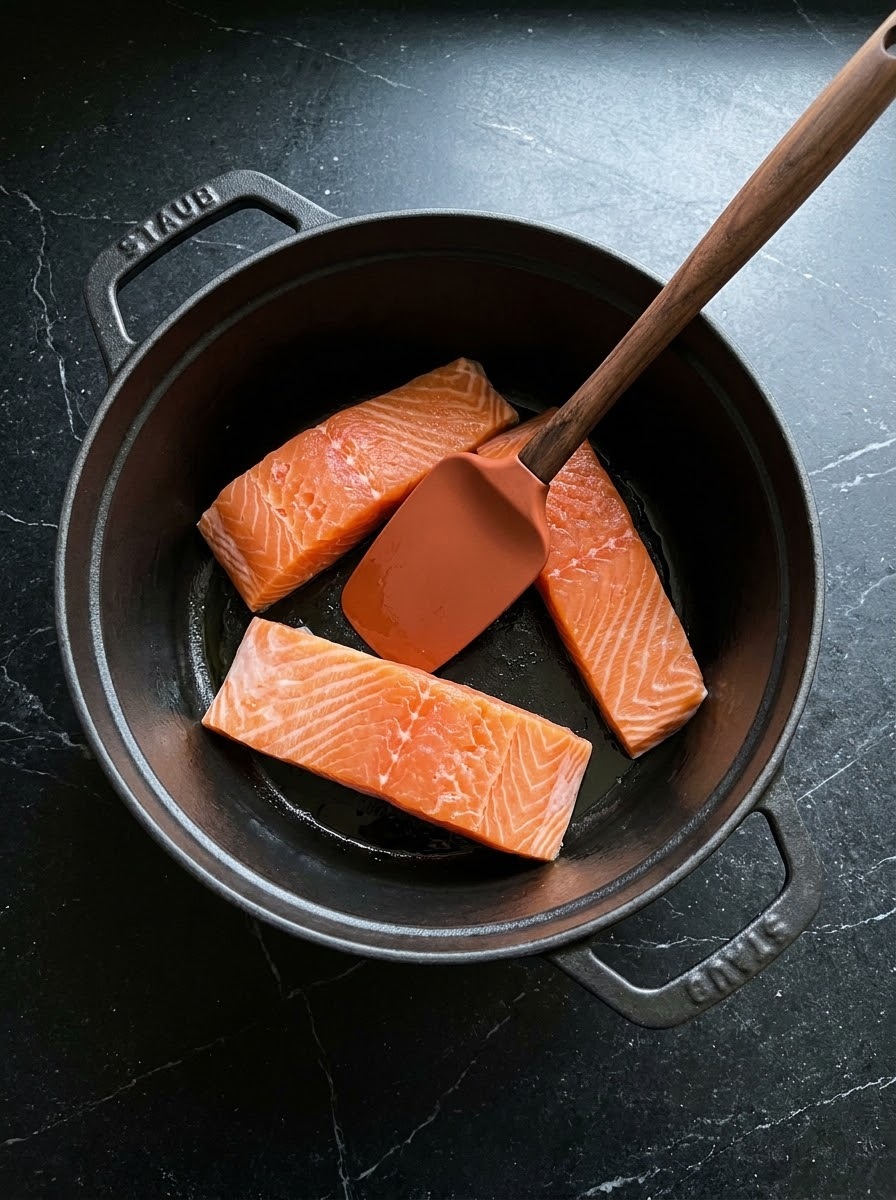
Preheat your oven to 400°F (205°C) with the rack in the center. Brush 1 tablespoon (15 ml) of extra-virgin olive oil across the bottom of a deep matte-black enameled cast-iron Dutch oven or baking dish. Pat the 4 salmon fillets completely dry with paper towels and lay them skin-side down with 1 inch (2.5 cm) of space between each piece.
Step 2: Whisk and Spoon the Garlic-Dijon Butter
In a small bowl, whisk 3 tablespoons (42 g) melted unsalted butter, 4 cloves minced garlic, 1 tablespoon (15 ml) fresh lemon juice, 1 teaspoon (2 g) lemon zest, 1 tablespoon (15 g) Dijon mustard, 1 teaspoon (5 g) kosher salt, 1/2 teaspoon (1.5 g) black pepper, and 1/2 teaspoon (1.5 g) smoked paprika until smooth and glossy. Spoon the mixture evenly over the tops and sides of the salmon, then tuck 4 thin lemon slices between the fillets.
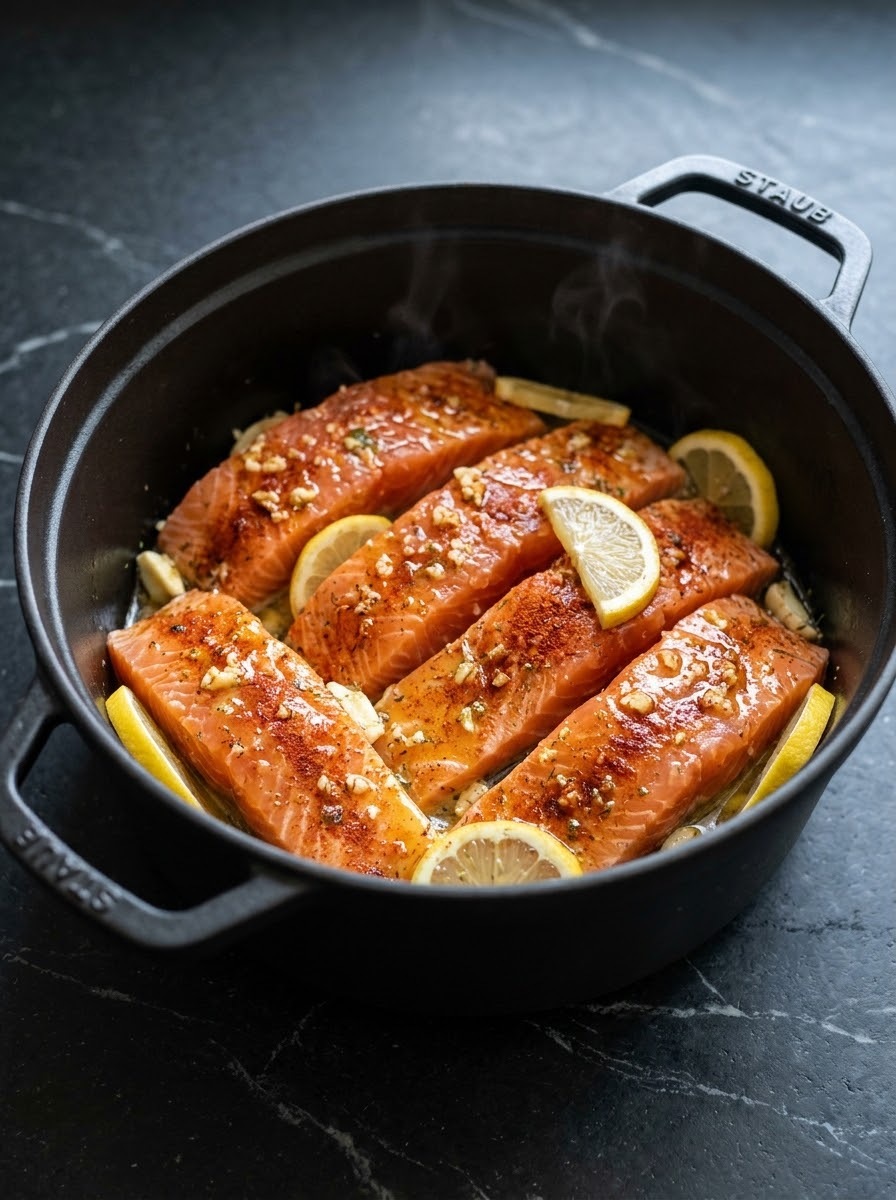
Step 3: Roast Uncovered Until Just Flaky
Slide the uncovered pan onto the center rack and roast for 12 to 15 minutes. Watch for the edges of the fillets to turn opaque coral-pink while the pan butter bubbles gently around the lemon slices.
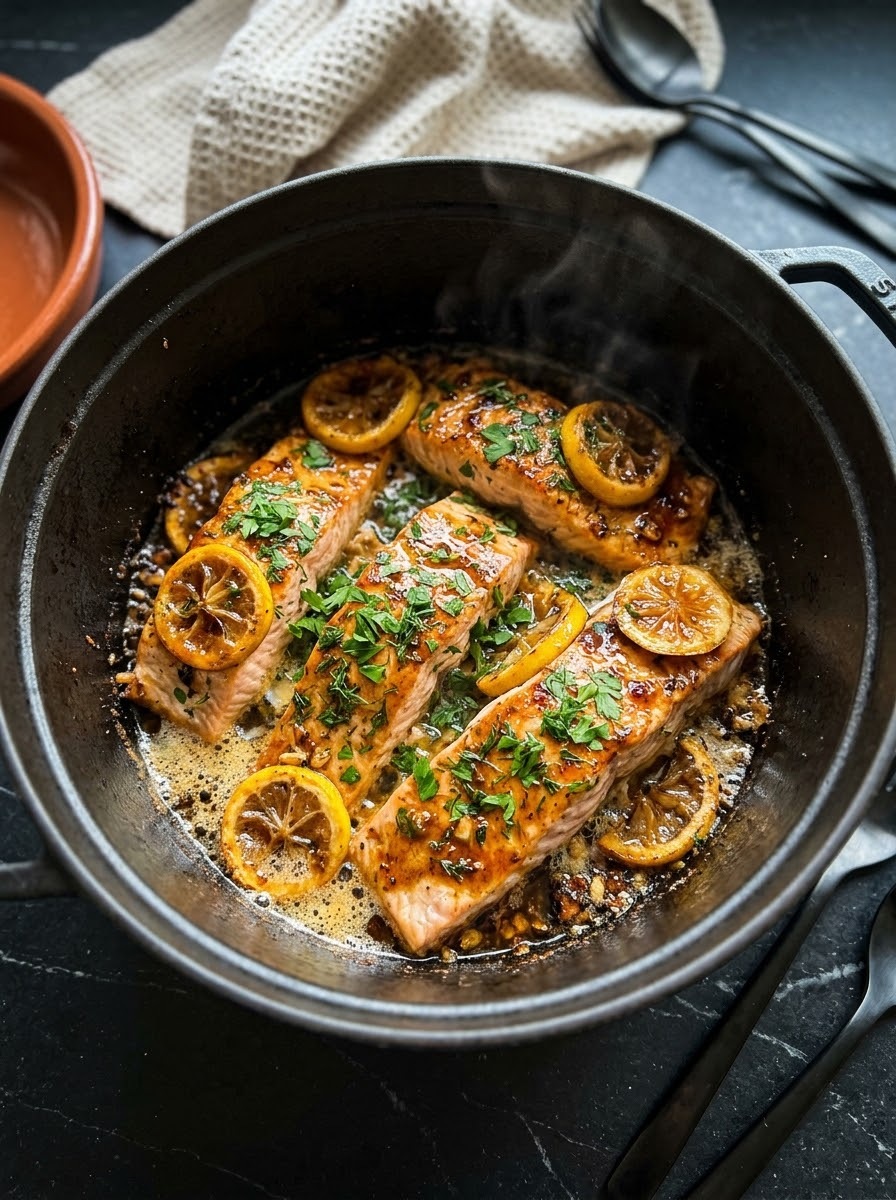
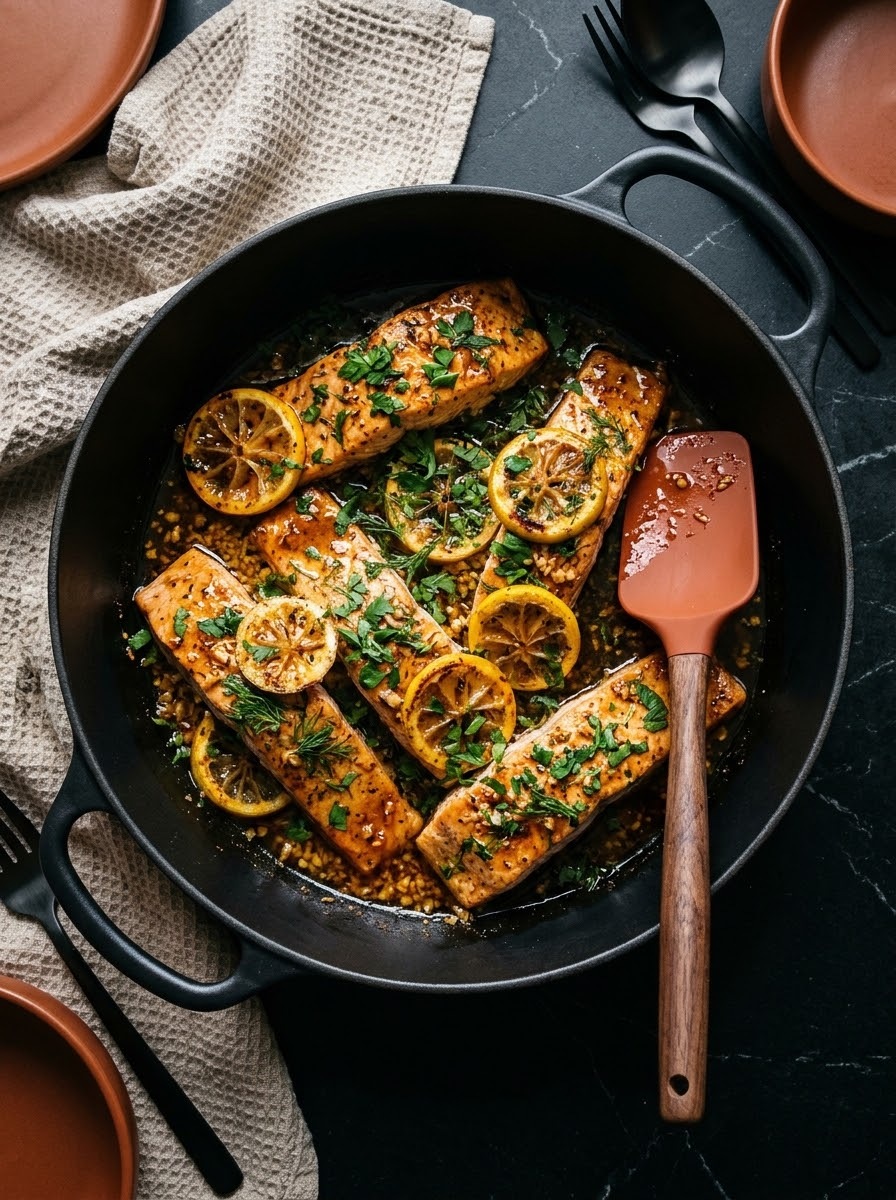
Step 4: Check Temperature, Baste, and Rest
Insert an instant-read thermometer into the thickest part of a fillet—pull the pan as soon as it reads 125°F to 130°F (52°C to 54°C) for moist, flaky medium, or 140°F (60°C) for firm well-done. Spoon the warm pan butter over each fillet, scatter 2 tablespoons (8 g) chopped parsley and 1 tablespoon (4 g) chopped dill on top, and rest 3 minutes before serving.
4 Tips to Prevent Overcooking or Bland Flavor
- Avoid Uneven Thin Tail Pieces: Tail ends cook 4 minutes faster than thick center cuts; fold thin tail tips underneath themselves so the whole fillet has uniform thickness.
- Never Cover the Pan with Foil: Trapping steam turns the garlic-butter glaze watery and prevents the top from developing golden color.
- Skip Cold Straight-From-Fridge Fillets When Possible: Letting salmon sit on the counter for 10 minutes while the oven preheats helps the center warm evenly.
- Season Every Side, Not Just the Top: Spoon a little of the spiced butter down the exposed sides of each fillet so every bite tastes seasoned.
4 Simple Variations to Try Next Time
- Honey Mustard Glaze: Whisk 1 tablespoon (21 g) honey into the garlic-Dijon butter and omit the smoked paprika for a sweet-savory crust.
- Spicy Cajun Herb: Replace smoked paprika with 1 teaspoon (2.5 g) Cajun seasoning and add a pinch of red pepper flakes.
- Mediterranean Olive & Caper: Scatter 2 tablespoons (20 g) drained capers and 1/4 cup (40 g) halved cherry tomatoes around the fillets before roasting.
- Dairy-Free Olive Oil & Herb: Swap the 3 tablespoons (42 g) melted butter for 3 tablespoons (45 ml) extra-virgin olive oil or ghee.
Make-Ahead, Storage & Reheating Without Overcooking
Fridge Storage: Store cooled leftover salmon in an airtight glass container in the refrigerator for up to 3 days, spooning any leftover pan butter over the top to keep the surface moist.
Freezing & Reheating: Freeze cooked fillets wrapped tightly in foil and a freezer bag for up to 2 months, then thaw overnight in the fridge. Reheat gently in a 275°F (135°C) oven covered with foil for 8 to 10 minutes until just warmed through—avoid microwaving on high power, which turns salmon tough.
Frequently Asked Questions
Should I bake salmon skin-side up or skin-side down?
Always bake salmon skin-side down. The skin acts as a protective barrier against the hot pan bottom while the garlic-butter glaze coats and flavors the exposed flesh on top.
Do I need to flip baked salmon halfway through?
No flipping is needed. High 400°F (205°C) oven air circulates around the fillets and cooks them evenly from top to bottom without risking broken fish.
Can I use frozen salmon fillets for this recipe?
Yes—thaw the fillets completely overnight in the refrigerator, then pat them extra dry with paper towels before brushing on the garlic-Dijon butter.
How do I know when baked salmon is done without a thermometer?
Gently press the top of the thickest fillet with a fork; it is ready when the flesh separates cleanly along its natural white lines and looks opaque pink around the edges with a slightly translucent center.
The Final Result & Serving Suggestions
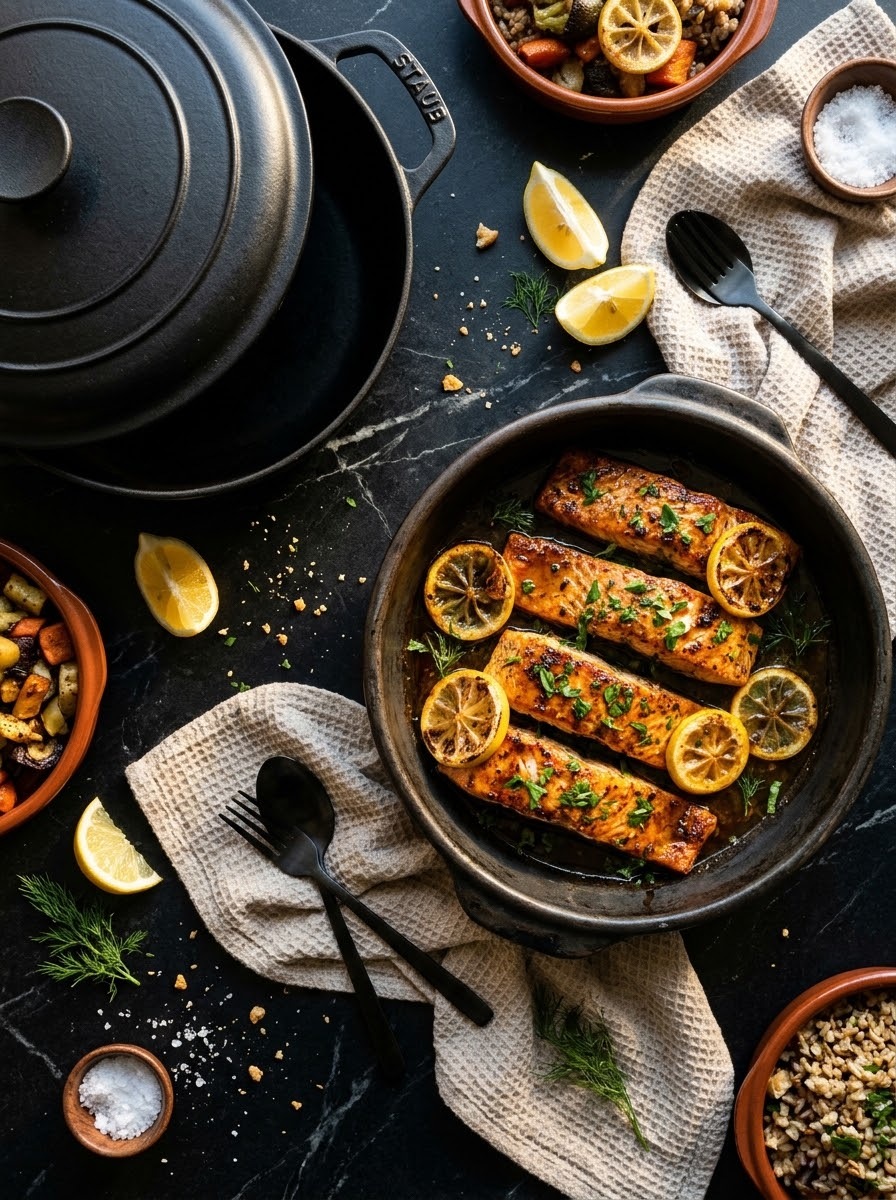
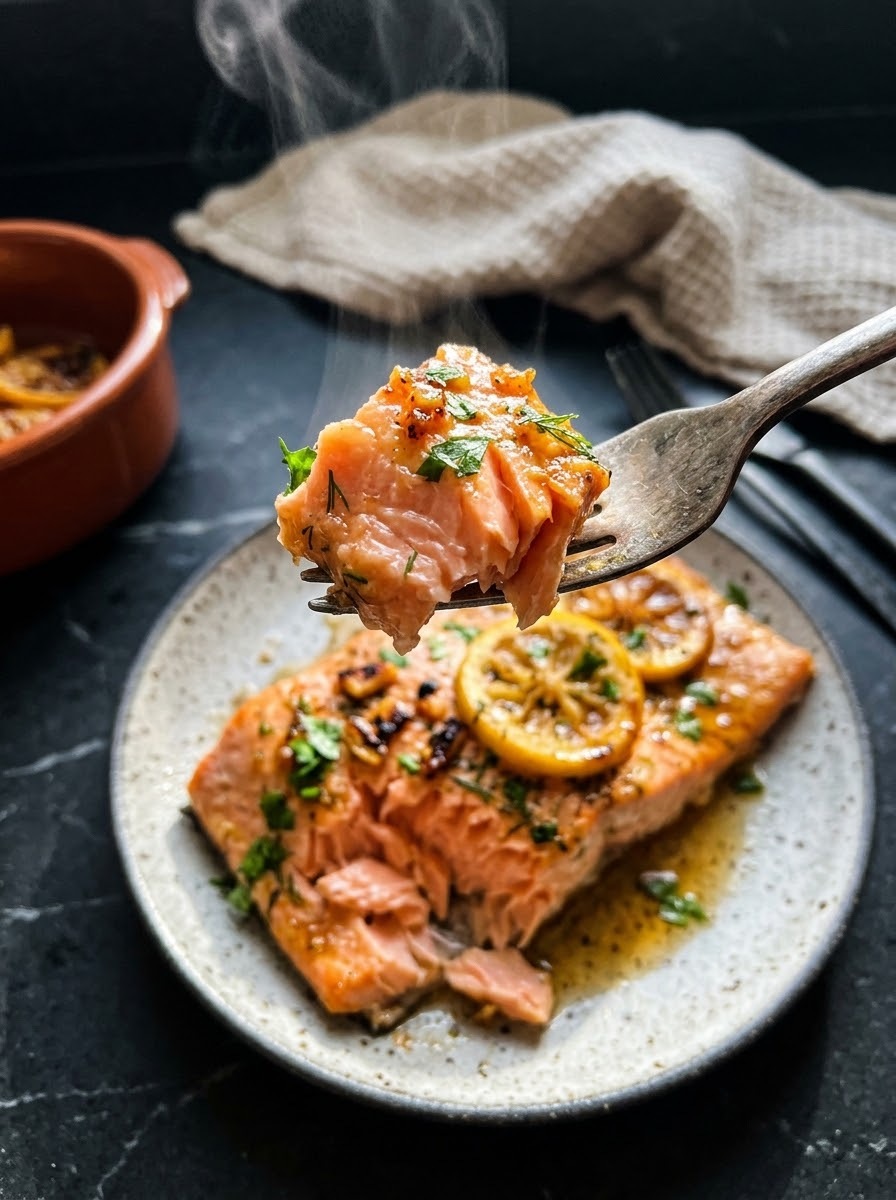
When pulled right at 128°F (53°C), these baked salmon fillets flake apart effortlessly at the touch of a fork while staying rich and buttery inside. Serve them straight from the Dutch oven with steamed jasmine rice, roasted asparagus, or crusty bread to soak up every drop of the lemon-garlic pan butter.
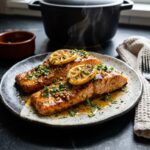
Pacific Northwest Lemon Garlic Baked Salmon Fillets
- Total Time: 25 Mins
- Yield: 4 servings 1x
Description
Flaky, tender baked salmon coated in browned garlic butter, fresh lemon, and herbs, roasted at 400°F in just 25 minutes from start to finish.
Ingredients
- 4 skin-on Atlantic salmon fillets, about 6 oz (170 g) each and 1 to 1.25 inches (2.5 to 3 cm) thick
- 3 tbsp unsalted butter (42 g), melted
- 1 tbsp extra-virgin olive oil (15 ml)
- 4 cloves garlic (12 g), finely minced
- 1 tbsp fresh lemon juice (15 ml), plus 1 tsp (2 g) finely grated lemon zest
- 1 tbsp Dijon mustard (15 g)
- 1 tsp kosher salt (5 g)
- 1/2 tsp freshly cracked black pepper (1.5 g)
- 1/2 tsp smoked paprika (1.5 g)
- 2 tbsp fresh parsley (8 g), finely chopped
- 1 tbsp fresh dill (4 g), finely chopped
- 4 thin lemon slices (30 g), for roasting and garnish
Instructions
- 1. Position an oven rack in the center and preheat the oven to 400°F (205°C). Lightly brush the bottom of a deep matte-black enameled cast-iron Dutch oven or oven-safe baking dish with 1 tablespoon (15 ml) of extra-virgin olive oil.
- 2. Pat the 4 salmon fillets thoroughly dry on both sides with paper towels so the seasoning clings evenly and the surface roasts rather than steams. Arrange the fillets skin-side down inside the oiled Dutch oven, leaving at least 1 inch (2.5 cm) of space between each piece.
- 3. In a small bowl, whisk together 3 tablespoons (42 g) melted unsalted butter, 4 cloves minced garlic, 1 tablespoon (15 ml) fresh lemon juice, 1 teaspoon (2 g) lemon zest, 1 tablespoon (15 g) Dijon mustard, 1 teaspoon (5 g) kosher salt, 1/2 teaspoon (1.5 g) black pepper, and 1/2 teaspoon (1.5 g) smoked paprika until emulsified.
- 4. Spoon the garlic-butter emulsion evenly over the tops and sides of the salmon fillets, then tuck 4 thin lemon slices alongside the fish.
- 5. Roast uncovered at 400°F (205°C) for 12 to 15 minutes, until the salmon flakes easily with a fork at the thickest edge and an instant-read thermometer reads 125°F to 130°F (52°C to 54°C) for medium, or 140°F (60°C) for well-done.
- 6. Remove the Dutch oven from the oven, baste the fillets once with the warm pan butter, scatter 2 tablespoons (8 g) chopped fresh parsley and 1 tablespoon (4 g) chopped fresh dill over the top, and rest for 3 minutes before serving.
Notes
- Make-Ahead Window: Whisk the garlic, lemon, Dijon, and melted butter mixture up to 24 hours ahead and store covered in the fridge; gently rewarm for 15 seconds before brushing onto the salmon.
- Storage & Reheating: Refrigerate leftover salmon in an airtight container for up to 3 days. Reheat gently at 275°F (135°C) for 8 to 10 minutes covered with foil to prevent drying out.
- Tested Swap: Swap fresh dill for 1 tablespoon finely chopped fresh chives or tarragon if dill isn’t on hand, or use ghee in place of unsalted butter for a dairy-sensitive option.
- Prep Time: 10 minutes
- Cook Time: 15 minutes
- Category: Main Course
- Method: Baking
- Cuisine: American